Let’s cut straight to the chase: beating the dealer at a live casino table is the dream that fuels countless late-night gambling sessions. It’s the classic underdog story, and watching a skilled player rake in chips while the dealer shakes their head is a powerful image. But here’s the cold, hard truth: you can’t beat live casino dealers in the long run. It’s not about the dealer’s skill or some casino conspiracy; it’s pure mathematics. The house edge is an invisible force, a built-in statistical advantage that gets stronger with every single hand you play. That doesn’t mean you’re completely powerless, though. You can improve your odds, dodge common amateur mistakes, and drastically increase your chances of walking away a winner on any given night. This isn’t a hype piece or a get-rich-quick scheme; it’s a reality check. We’re going to break down what actually works, what’s a complete waste of your money, and how to shift your mindset to get the most value and fun out of your experience. Stick around—this might just save you a fortune.
Why the House Always Wins – The Unchangeable Math
Let’s get straight to the point. Live dealer games aren’t magic. They’re math. That house edge, the tiny statistical advantage built into every single bet, is the only real player in the room. Blackjack pays 3:2 on a natural, but you still lose more hands than you win. Roulette has that extra green 0 and 00, a 5.26% tax on every spin. Each hand is a fresh event. The past means nothing. Dealers don’t get “hot” or “cold.” The cards don’t remember. The wheel doesn’t have a memory. A player once swore a dealer was on a “hot streak.” He doubled down, increased bets, and chased the ghost. He lost three hundred dollars in twenty minutes. The dealer just shuffled. The math didn’t change. Random Number Generators and physical randomness ensure fairness, but they tilt the odds toward the casino. Always. That’s the unchangeable truth. You can’t read the dealer. You can’t beat the edge. You can only play and hope. The house always wins in the long run. That’s not opinion. That’s probability.
The Myth of Dealer Tells and Patterns
Gambling myths die hard. One of the biggest? Dealer tells. In professional live dealer games, cameras watch every angle. Strict protocols govern every move. Dealers are trained to shuffle, cut, and deal with mechanical precision. There is no nervous twitch. No subtle signal. The idea that a dealer would risk their job to give you a hint is absurd. A player once claimed he could “feel” the next card based on how the dealer held the deck. He bet big. He lost big. Every single time. Pattern recognition is a human brain trick. It sees order in chaos. But the shuffle is random. The dealer is a robot. The math is the only pattern.
Why Card Counting Is Nearly Impossible Online
Card counting? Forget it. Continuous Shuffling Machines (CSMs) are the standard. They shuffle the used cards back into the shoe after every hand. The count resets to zero. No advantage to build. Even with hand-shuffled decks, the cut card is placed deep. You get maybe half a deck of play before a reshuffle. The speed of the game is relentless. You don’t have time to count. A player tried. He downloaded a counting app, practiced for weeks. He sat down at a live dealer blackjack table. He counted. He lost. The CSM killed his strategy. The cut card killed his edge. The math laughs at the counter. Online, the house always wins.
Where Players Can Actually Gain an Edge – Skill-Based Games
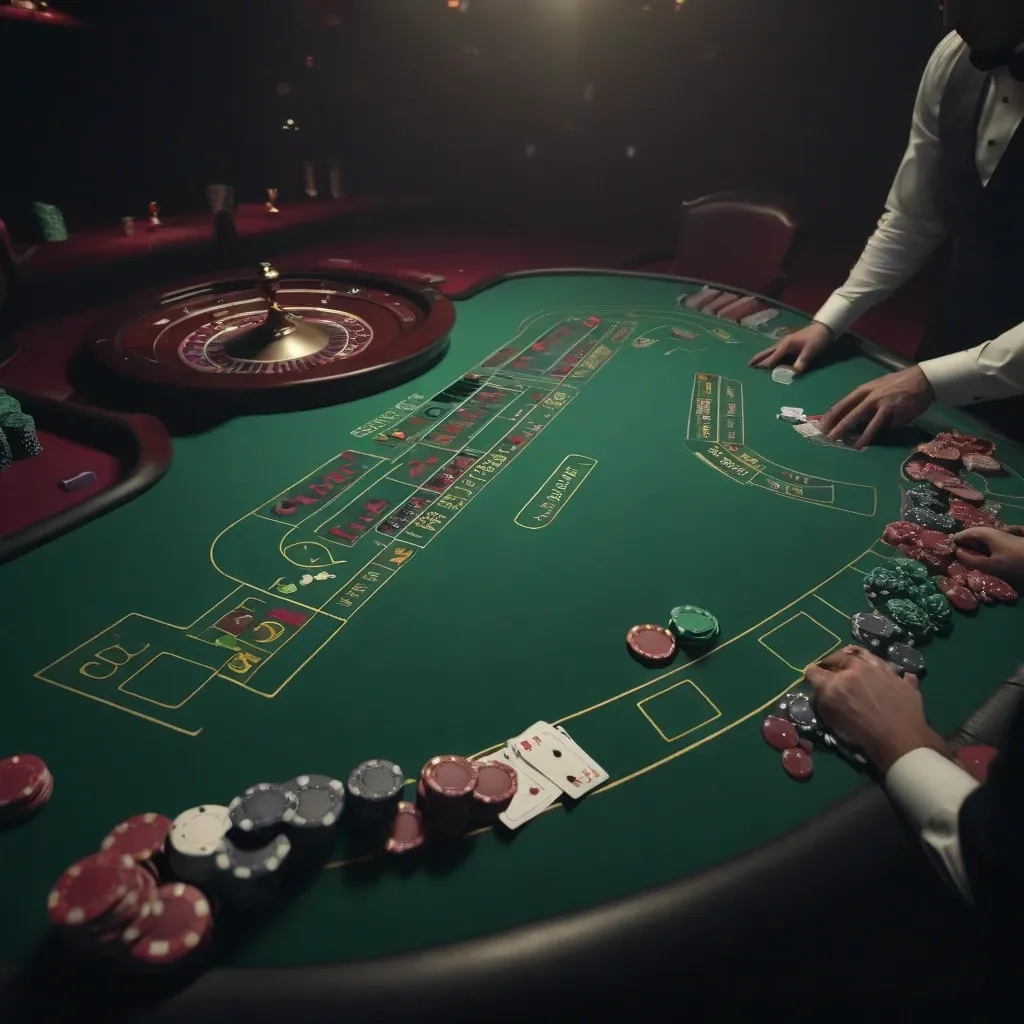
Let’s cut through the noise: in games like blackjack and baccarat, your brain is your best bet. Unlike pure luck slots, these games reward decisions. Using an optimal strategy doesn’t just polish your play—it mathematically slashes the house edge. For example, blackjack basic strategy drags the casino’s built-in advantage from roughly 2% down to a razor-thin 0.5%. That’s not a win, but it’s a hell of a lot closer to even. And here’s the kicker: the casino still wins over time, but you buy yourself longer, more entertaining sessions. Perfect play is absolutely achievable with practice, and it turns a mindless gamble into a mental exercise. The trick? Use a strategy card at the table. No one will kick you out for being smart. It’s the closest thing to a fair fight you’ll ever find in a casino.
Basic Strategy: Your Best Weapon
Basic strategy isn’t guesswork—it’s a precise, decision-making map covering every possible hand. It tells you to always split aces and eights, never take insurance, and when to surrender on those brutal 16s. You don’t need to memorize it overnight; just print a strategy chart and keep it beside you. One player I remember ditched his ‘gut feel’ approach, started following the chart religiously, and his sessions stopped ending in fast, ugly busts. He didn’t suddenly win every night, but he stayed at the table longer, enjoyed more hands, and lost less. That’s not magic—that’s math working in your favor.
Bankroll Management: The Forgotten Skill
Here’s the part everyone ignores: how you bet matters more than how you play. A unit-based system—say, 1% of your bankroll per hand—keeps you alive. Picture a player with $500 dropping $50 a hand. That’s ten hands, maybe fifteen, then it’s over. Swapping that for $5 a hand might feel slow, but it turns a coin flip into a marathon. It doesn’t boost your edge, but it prevents catastrophic loss. And in a game of inches, lasting longer is the real win.
Common Strategies That Fail – And Why
You’ve seen them—the Martingale zealot doubling down until the felt breaks, the pattern chaser convinced the next shoe will finally balance the scoreboard, the “due” number believer who thinks the wheel owes him a hit. These aren’t strategies; they’re gambling fallacies dressed up in math that doesn’t work. Progressive betting systems like the Martingale don’t change the house edge; they just rearrange the speed of your destruction. Pattern chasing—whether it’s hot streaks or cold tables—is pure gambler’s fallacy, a refusal to accept that every hand, spin, or roll is an independent event. Take the cautionary tale of a player who saw a string of losses, doubled down again and again, convinced the law of averages would save him. He hit the table limit, then his bankroll’s limit, and walked away with nothing. The math never cared about his feelings. These systems accelerate losses, not wins.
The Martingale Myth
Here’s the illusion: start with a $5 bet, lose, double to $10, then $20, $40, $80, $160. After six straight losses you’re wagering $320—just to win back your original $5. Table limits often stop you at $300 or $500, so you can’t even complete the progression. And even if you had an infinite bankroll and no table caps, the expected value remains negative because the house edge on each individual bet doesn’t vanish. Variance will eventually hand you a losing streak long enough to crush you. The Martingale doesn’t beat the odds; it just makes your losses catastrophic when they finally arrive.
The ‘Hot Streak’ Fallacy
Picture a player watching the dealer pull three blackjacks in a row. “Dealer’s on fire,” he mutters, then starts increasing his bets to “counter” the streak. He’s fallen for the gambler’s fallacy—the belief that a run of events must be followed by a correction. But each hand is an independent event; the deck has no memory. Randomness can produce long streaks, and they don’t mean anything. That player lost more money trying to outsmart the dealer’s “hot hand” because he ignored the simple truth: the cards don’t care what happened before. Streaks happen. Chasing them is a fast track to the rail.
What You Can Realistically Achieve – Setting Expectations
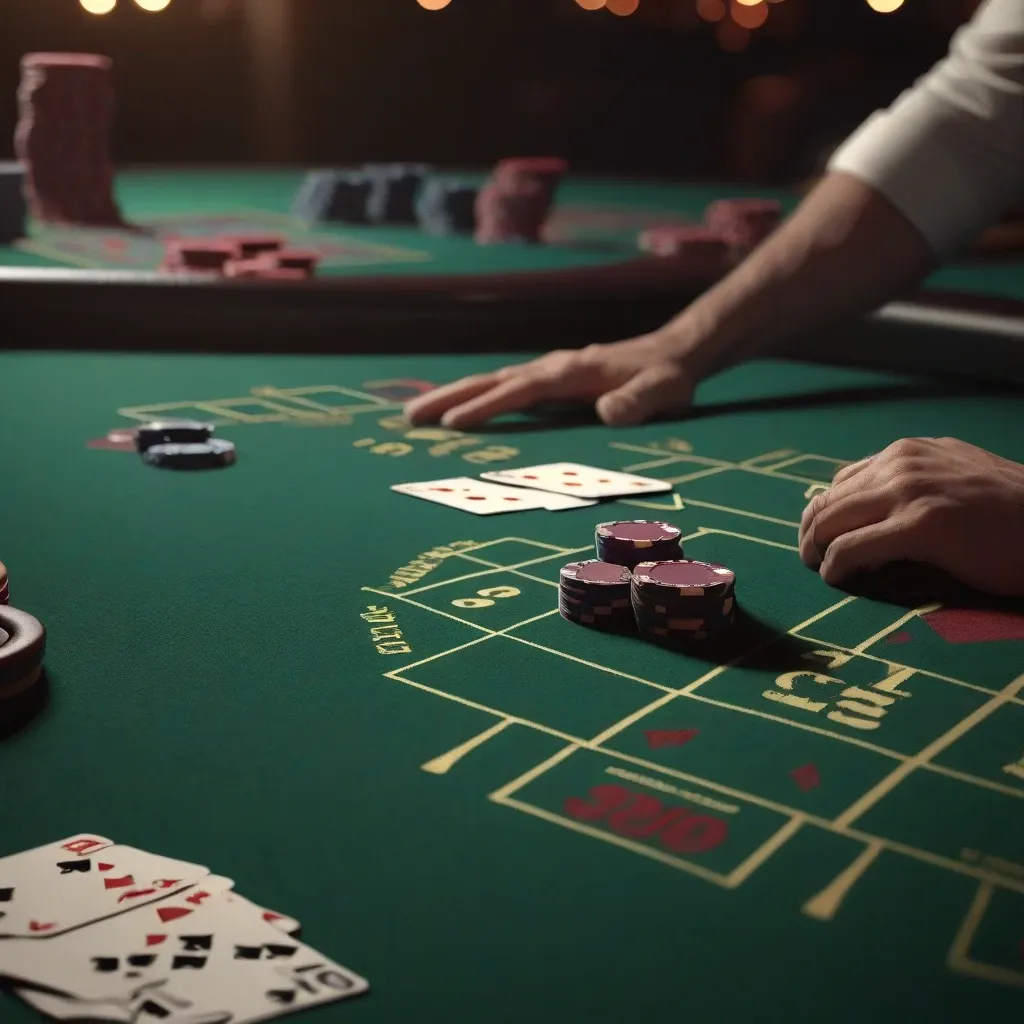
Let’s get one thing straight from the start: you are not going to beat the house over the long haul. The math is fixed, and the edge is with the casino. That’s the cold, hard truth. But here’s the thing you can actually achieve: you can have a fantastic, extended session that delivers a ton of thrills. The real goal is to stretch your bankroll, maximize your playtime, and accept that the money you bring is the price of the entertainment. Some players get lucky and win in the short term, but that’s not a strategy. The house edge grinds you down over time. The true “win” is walking away with a smile, having enjoyed the experience without turning your life upside down. It’s about respecting the game, not trying to become a millionaire overnight. Treat it as entertainment, not an income.
The Role of Luck and Variance
Even a game with a razor-thin house edge of just 0.5% can seem utterly chaotic. That’s variance in action. It’s the statistical noise that can produce a brutal losing streak or a miraculous winning streak that defies all logic. You can’t predict it, and you can’t control it. I remember a guy at a blackjack table who was on absolute fire, winning hand after hand, doubling his stack. He was the king of the world. Then, over the next hour, he lost every single chip. That’s not a rigged table; that’s just the reality of a small sample size. The math always shakes out in the end, but randomness can make the journey feel wild.
When to Walk Away – The Ultimate Skill
The most powerful tool you have isn’t a betting system; it’s your legs. The ability to walk away is the ultimate skill. Before you even sit down, set your limits. A simple rule: if you double your buy-in, you leave. If you lose 50% of it, you stop. This doesn’t change the mathematical odds, but it protects your bankroll and your sanity. I knew a player who always left after a 20% gain, no matter what. He never had a massive score, but he managed to stay in profit over many sessions. It’s an anomaly, but it perfectly illustrates the power of discipline. It’s about self-control, not just luck. This simple act of discipline is your best defense against problem gambling and ensures your session stays fun.
Here is the final verdict—the truth about live dealer games, unfiltered. After all the strategy talk, the bankroll management, and the probability breakdowns, one harsh reality remains: the house always wins. Not in a sinister, back-room kind of way, but through the pure, unyielding mathematics of the game. You can’t beat the dealer over the long haul. The best you’ll ever do is push, and that’s only if you play perfectly.
So, what’s the point? Why play at all? Because the entertainment value is the real payoff. Any system, strategy, or “expert” claiming to have a surefire way to consistently win is either scamming you or fundamentally misunderstanding how probability works. The smartest play is to walk in with your eyes open, manage your money, and treat the experience as a thrilling ride, not an investment. Next time you sit at a live dealer table, go with the right mindset: have fun, play smart, and never chase losses. That’s the only way to truly win.